Key Takeaways
- Traditional agency models are becoming obsolete, necessitating a shift towards more integrated and flexible structures.
- Artificial Intelligence (AI) and automation are revolutionizing agency workflows, enhancing efficiency and personalization.
- Strategic partnerships are replacing the all-encompassing full-service approach, allowing agencies to focus on core competencies.
- Data-driven decision-making is paramount, as agencies leverage analytics to inform their strategies and measure success.
- Client-centric approaches are essential, emphasizing personalized experiences and value-driven services.
As the digital marketplace continues to evolve and diversify, the agency landscape is undergoing rapid changes. Full-service ecommerce and marketing agencies are reshaping their approaches to stay competitive and to address the increasingly complex needs of businesses and their audiences. This evolving landscape opens new opportunities for innovation and efficiency, foregrounded by both technology and strategic collaboration. For those looking to stay at the forefront of these changes, working with a forward-thinking partner such as Front Row can make all the difference in how successfully brands adapt and grow online.
The days of relying solely on broad, traditional agency models are waning. Agencies are now required to integrate next-generation technology, more innovative structures, and highly personalized strategies to remain effective. At the same time, brands themselves are becoming more selective—demanding not only results but also flexibility and tailored expertise from their agency partners.
With the proliferation of digital tools and channels, the responsibilities of agencies have evolved beyond execution; they now serve as strategic advisors and problem solvers equipped with the right technology to deliver at scale. These shifts have led to a restructuring of what “full service” truly means, challenging agencies to innovate or risk being left behind.
For marketers and ecommerce leaders, keeping pace with these changes means rethinking agency relationships and exploring new models that are not only efficient but also aligned with business goals and measurable results. The most agile agencies are those that redefine their roles and leverage new partnership opportunities to deliver seamless customer experiences. Recent trends highlighted by Forbes underscore how technology is fundamentally redefining the functions of marketing agencies.
Introduction
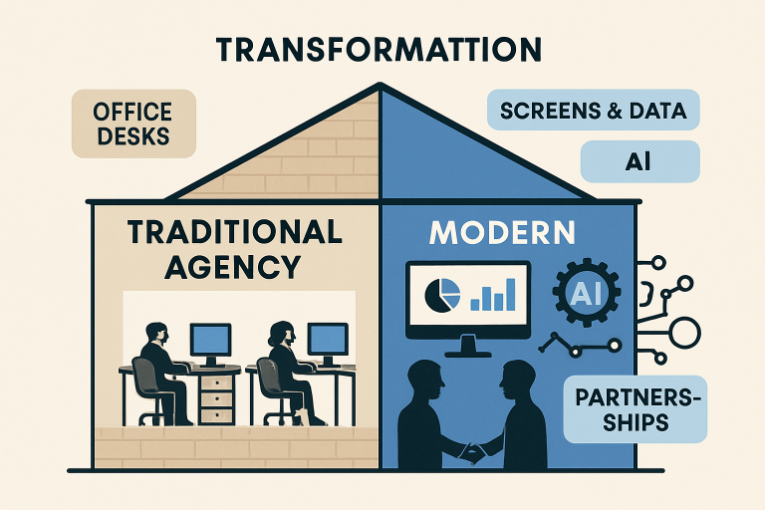
For decades, full-service agencies positioned themselves as one-stop shops for all things marketing and ecommerce. However, seismic shifts in consumer behavior, technology, and business expectations have disrupted this model. Agencies must now do more than offer a menu of services—they must create agile, holistic solutions that address specific client challenges and opportunities within a fast-paced digital environment.
The Decline of Traditional Agency Models
The classic agency framework—rigid, hierarchical, and staffed with in-house personnel for every conceivable function—is proving inadequate. Several forces are driving this decline:
- Technological Advancements: The rapid growth of AI and automation tools means that smaller, specialized teams can now perform many tasks that were formerly manual or time-consuming.
- Client In-Housing: Brands are increasingly building their own marketing teams to exert greater control and reduce costs, thereby reducing their reliance on external agencies.
- Platform Dominance: Major platforms, such as Google and Amazon, now empower brands with self-service advertising and analytics, further diminishing the intermediary roles of agencies.
This transition has compelled agencies to reassess their fundamental value proposition, with many acknowledging the pressing need to prioritize depth and expertise over breadth of services.
Embracing AI and Automation
AI and automation are no longer optional; they are now instrumental in providing scalable quality and insight for clients. Leading agencies are embracing these technologies to:
- Enhance Efficiency: By automating repetitive or low-value tasks, agencies free up human talent to focus on strategic, creative, and high-impact work.
- Personalize Campaigns: AI-driven targeting enables highly tailored customer experiences, improving campaign relevance and conversion rates.
- Analyze Data: Advanced analytics unlock customer and campaign insights at speed and scale previously unattainable, driving more intelligent decisions.
Modern agencies that harness these technologies become more responsive and predictive, ensuring clients benefit from up-to-the-minute insights and rapidly optimized campaigns.
Shift Towards Strategic Partnerships
Instead of trying to provide every potential service internally, many agencies are forming alliances with niche service providers or tech platforms. These strategic partnerships enable agencies to:
- Focus on Core Competencies: Concentrate resources and talent on what they do best, while augmenting their capabilities through strategic partnerships.
- Enhance Flexibility: Collaborate as needed to meet evolving client requirements, without the overhead or rigidity of a large, generalist team.
- Improve Client Satisfaction: Provide clients with best-in-class solutions through a curated network of specialized experts and tools.
Agencies adopting this model become connectors, bringing together teams, technologies, and insights to deliver a seamless client experience that adapts to ever-changing demands.
Data-Driven Decision Making
Data and analytics sit at the heart of modern marketing. Agencies increasingly leverage sophisticated data platforms and analytics tools to:
- Inform Strategies: Build campaigns and content based on actionable customer and market insights.
- Measure Success: Utilize clear metrics and dashboards to demonstrate ROI and prove effectiveness to clients.
- Optimize Performance: Continuously refine campaigns and strategies in real-time, maximizing impact while minimizing waste.
This commitment to transparency and accountability is not only expected by clients but also provides agencies with a blueprint for ongoing improvement and innovation.
Client-Centric Approaches
The modern agency-client relationship is founded on partnership, trust, and shared outcomes. Instead of selling a suite of standard services, agencies are:
- Personalizing Experiences: Treating every client and campaign as unique, with custom strategies that truly fit the brand’s goals and audience.
- Delivering Value: Measuring success by the value delivered—be it growth, engagement, or efficiency—rather than by volume or vanity metrics.
- Building Relationships: Focusing on long-term growth together, not just short-term transactions, often creates lasting agency-client partnerships built on mutual benefits.
This shift cements the agency’s role not just as a vendor, but as a trusted advisor and an indispensable extension of the client’s team.
Conclusion
Full-service ecommerce and marketing agencies are redefining themselves amid a landscape shaped by relentless technological change, rising client sophistication, and the emergence of data-driven strategies. Agencies that leverage AI, cultivate strategic partnerships, and keep the client at the heart of every interaction will thrive and deliver measurable results in an increasingly complex world.