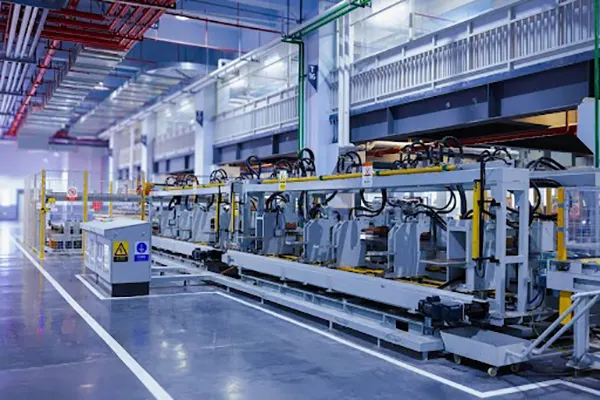
CNC automation is revolutionizing how products are made. It is an integral part of modern manufacturing and a key driver of tech innovation across many industries.
Factories simply couldn’t run as quickly, efficiently, or accurately without it. As a result, they also would not be nearly as competitive.
In fact…
The real secret is this…
Anyone who cares about tech innovation should know how this powerful technology is reshaping the industry.
That’s what this guide will teach you.
What You’ll Discover:
- What Is CNC Automation?
- Why CNC Automation Matters for Tech Innovation
- The Benefits of Industrial Automation Solutions
- Industries That Rely on CNC Automation
- Getting Started with CNC Technology
What Is CNC Automation?
CNC stands for Computer Numerical Control.
It is a manufacturing process where the movement of factory tools and machinery is controlled by software.
In other words, it is giving tools a set of instructions so that they can produce a finished product. Industrial automation solutions take it one step further by automating production completely.
Systems like CNC Automation utilize advanced robotics and software to create entirely hands-free production lines.
These operations can then execute highly complex cutting, drilling, milling, and grinding tasks with very little to no human intervention.
The result is a product made with the utmost precision and consistency. Precision that manual manufacturing simply cannot match.
Why CNC Automation Matters for Tech Innovation
CNC automation is a key driver of tech innovation.
In fact, most people are unaware of how large the market is getting.
The global CNC machine market size was valued at $95.29 billion in 2024. By 2032, it is estimated to reach $195.59 billion. That growth is powered by demand for accuracy, speed, and efficiency.
But how is this relevant to tech innovation?
There are many reasons.
- Speed to Market Faster CNC systems allow for prototypes and products to be manufactured in much less time.
- Complex Designs Are Made Possible The precision of modern CNC machines allows for the production of parts and tools that would otherwise be impossible to make. This leads to innovation in aerospace, medical devices, consumer electronics, and more.
- Consistent Quality Every part is identical to the last. This level of consistency is critical in industries where even the smallest variation can lead to big problems.
- Flexibility Small- and medium-sized batches can be produced with minimal delay or waste.
- Lower Cost In the long term, CNC automation can drastically cut material waste and labour costs.
The Benefits of Industrial Automation Solutions
Industrial automation solutions offer several key benefits to manufacturers.
- Increased Productivity Automated systems can work for extended periods without stopping. In other words, production output can be ramped up significantly.
- Fewer Errors One of the biggest challenges of traditional manufacturing is human error. CNC automation drastically cuts these mistakes since each process is executed precisely as programmed.
- Savings Over Time While the upfront cost of automation can be high, long-term labour and material waste reductions reduce costs. The industrial automation market is expected to grow to $378.57 billion by 2030. This level of growth indicates how many businesses recognize the long-term benefits.
- Worker Safety Dangerous work can be automated instead of being done by workers. This protects employee safety and drastically reduces workplace accidents.
- Greater Quality Control Products and parts are made with incredible precision. The quality of products made by machines can drastically outstrip what is possible with manual methods.
- Accurate Record-Keeping Tracking software can be used to keep production data on cost, time, and material.
- Improved Scalability Automated processes can be replicated as business operations expand.
Industries That Rely on CNC Automation
CNC automation is not limited to one particular industry. In fact, many of them depend on this technology for their core operations.
- Automotive Manufacturing Vehicle manufacturers use CNC machines for everything from engine components to body panels and interior parts. Precision is required to meet the tight tolerances of modern vehicles, so automation is essential.
- Aerospace and Defence Aircraft components must meet incredibly high standards. CNC automation is used to ensure the level of accuracy and performance needed.
- Medical Device Production Surgical tools, implants, and diagnostic equipment are all examples of medical products that require precise manufacturing. CNC systems are used to make them.
- Electronics Manufacturing Computers, circuit boards, and electronic housings need tiny and precise cuts. CNC systems can easily handle micro-scale operations.
- General Industrial Manufacturing This list also includes furniture, machine parts, and other products. CNC automation is used throughout the industrial sector for all kinds of manufacturing processes.
How CNC Automation Drives Efficiency
The efficiency benefits of CNC automation are astounding.
Traditional manual production usually means:
- Multiple changes of setup.
- Measurements need to be done manually.
- Quality checks are required at each stage.
- Material waste can be significant.
Automated CNC systems streamline all of this. Once they have been programmed, the machines perform complex operations in series without stopping to make adjustments.
Material waste is drastically reduced as well since the machines cut with precision. Fewer rejected parts mean a better margin of profit and less environmental impact.
Production planning also becomes more accurate since managers can predict output and delivery times. Automated systems perform consistently without slacking or speeding up.
The Role of Software in Modern CNC Systems
Software plays a big role in today’s CNC automation solutions.
CAD or computer-aided design software is used to create digital blueprints. CAM or computer-aided manufacturing software is then used to translate those plans into machine instructions.
In other words, the integration of design and manufacturing software means new products can go from concept to production much more quickly. Changes can be made digitally, then tested virtually without wasting any material.
Monitoring software is also common in advanced systems. These programs track machine performance in real-time. This helps with predictive maintenance to keep problems from happening.
Getting Started with CNC Technology
For those looking to get started with CNC automation, it’s usually best to start small.
The first step is to identify repetitive processes that could be automated. Look for tasks where consistency and accuracy are essential.
After that, research different CNC solutions to see which systems are a good fit. Not every operation needs the most expensive equipment.
Training is another important consideration. Employees need to know how to use, program, and maintain the new systems.
Summing It All Up
CNC automation is now a must-have for modern manufacturing and tech innovation. It provides the speed, consistency, and precision that the market demands.
The growth of the industrial automation solutions industry is not slowing down any time soon. Businesses that invest in this technology are future-proofing their operations.
These are the things to remember:
- CNC automation is the use of computer-controlled systems for manufacturing
- CNC technology enables the production of complex designs and tools that are not possible with traditional methods
- Multiple industries rely on CNC systems as a crucial part of their core operations
- Software integration is the key to the power and flexibility of modern CNC systems
- Small- and medium-sized automation projects are a great way to get started
The future of manufacturing is the future of automation. CNC technology is at the center of this transformation and innovation that it is bringing to every industry.