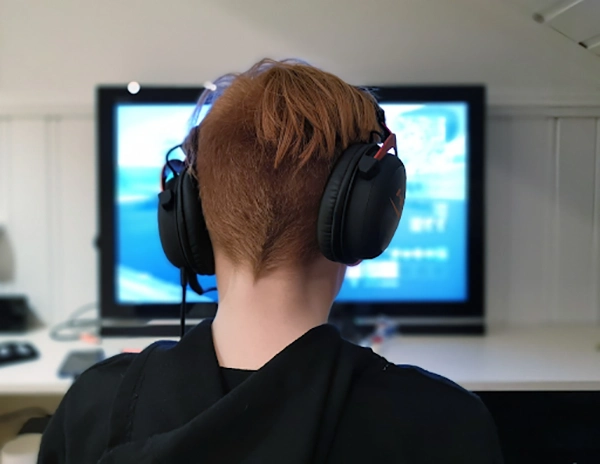
Do you know how to protect your kids playing online games?
Online gaming is an increasingly popular pastime for young people. And with that growth has come real and present dangers that all parents should understand. Fortunately, it is possible to create a safer environment for gaming without taking the fun out of it.
The Problem
Most parents have no idea what their children are doing online. They assume the games must be safe because they look like harmless cartoons. But the reality is far different…
What You’ll Learn
- Why Online Gaming Safety Should Be A Priority For Parents
- The Real Threats Children Face Online While Gaming
- The Tech Tools You Need To Protect Young Gamers
- Simple Rules For Responsible Gaming That Work
Why Online Gaming Safety Should Be A Priority For Parents
The statistics show just how big a problem this has become.
Recent surveys find that 85% of US teens now play video games regularly. That’s nearly every teenager in the country spending hours gaming with strangers.
And those strangers can be less than friendly…
Studies show that three-quarters of teens experienced harassment while gaming online. This includes everything from name-calling and threats to being exposed to pornography. Cases have become so severe that Roblox attorneys are now investigating safety failures in popular sites and games where children spend so much time.
Online gaming safety isn’t just about filtering out profanity in the chat window. It’s about preventing predators, scammers, and hate speech that can harm children for a lifetime.
Pretty scary stuff, huh?
The Real Threats Children Face Online While Gaming
The first step in protecting kids is to know the dangers.
Parents should have a full understanding of all of the threats that gaming brings to children. Here’s a rundown of the worst:
Cyberbullying and Harassment
Online harassment is the most common danger.
Bullying in games differs from bullying on the playground. It comes in the form of:
- Offensive player names directed at the child
- Abuse in voice chat during a game
- Exclusion from groups and teams
- Sharing personal information without consent
The vast majority of teens (four out of five) believe that harassment in video games is a serious problem for youth. That’s not some vocal minority crying wolf. That’s the majority saying there is a problem.
Online Predators
This is the place where things start to get really serious…
Predators use gaming platforms to target children. They build trust over time with innocuous conversation and common gameplay. Then they push children for private contact off the game.
This works so well because kids let their guard down. They believe they are only talking to another gamer. They don’t understand the “12-year-old” they are chatting with may really be a 40-year-old adult.
Scams and Phishing Attacks
Children also face significant risk from cybercriminals.
The opportunity to get free in-game currency or items is often too good to pass up. Cybercriminals use fake websites and phishing lures to trick children into sharing account login information. Some go so far as to harvest credit card numbers linked to accounts.
Games with large youth audiences like Minecraft and Roblox are frequently used for this purpose.
Exposure to Inappropriate Content
Not every game is made the same.
Platforms that are even made for kids can contain user-generated content that slips through moderation filters. This includes violent and graphic imagery, mature themes, and adult material that no child should be exposed to.
The Tech Tools You Need To Protect Young Gamers
Technology is part of the problem. But technology can also be part of the solution.
Parents should be using the following tools…
Parental Control Settings
Every platform has built-in parental controls. The issue is that parents almost never use them.
These controls give parents the ability to:
- Limit who can contact their child
- Filter and restrict chat
- Set limits on playtime
- Block mature content
- Monitor friend requests
Spend 15 minutes setting these controls and parents can prevent many issues before they happen. It is really that easy.
Content Filtering Software
Parental controls on individual games aren’t enough. Parents also need protection at the device level.
Content filtering software works on all internet activity on a device. This blocks inappropriate sites and can alert parents to potential abuse. Many even work across phones, tablets, and gaming consoles.
Communication Monitoring
Some parents opt to monitor the child’s communications directly.
This doesn’t mean going through every message. It means parents have access to see who their children are talking to and what is being said. Many tools offer alerts for certain words and contact patterns.
Simple Rules That Actually Work
The best tech tools also need to be paired with straightforward family rules.
Keep Gaming in Shared Spaces
The best rule of all may also be the simplest one…
All gaming devices should stay in shared areas of the home. Not in bedrooms. Not behind closed doors. If kids know parents can walk by at any moment, they tend to self-regulate better.
Know The Games Before Approving Them
Research all games before allowing children to play.
Look up the age ratings. Read other parent reviews. Watch videos of gameplay. Get to know exactly what a game contains and how it works. Learning about a game takes a few minutes but can make a huge difference.
Have Regular Conversations
This may be the single most important tip of all…
Parents should talk to their children regularly about their online gaming activities. Ask them who they are playing with. Ask them if something weird or uncomfortable has happened. Establish an environment where children feel comfortable telling the truth.
Children who have open and honest communication with their parents are far more likely to report early when something goes wrong. They know they won’t get punished for speaking up.
Set Clear Time Limits
Gaming addiction is a real and growing problem for children.
Parents need to establish boundaries around the number of hours gaming is allowed each day. They should hold children to these limits. Screen time should be balanced with outside play and in-person social interaction.
Teach Critical Thinking
Children should also understand that not everyone online is who they say.
Parents should teach children to question suspicious messages. Show them what phishing attempts look like. Help children understand why it is dangerous to share personal information.
A child who can identify a scammer is far safer than one that depends only on software controls.
Bringing It All Together
Online gaming safety is a combination of the right technology and parenting. Neither are perfect on their own. But together they provide layers of protection.
Key Takeaways
- Parents should use all parental controls on gaming platforms
- Parents should install content filtering on all devices
- Gaming devices should be kept in shared family spaces
- Parents should research games before allowing them
- Parents should talk regularly with children about gaming
- Parents should set and enforce time limits for gaming
Children have the right to play games without the risk of harassment, predators, or bad content. Parents can make that happen.
The threats are real. But so are the solutions. Start putting these tips into place today to make gaming a safer activity for the whole family.