Beyond Incognito: Why Ethical Browsers Are rising for Digital Wellbeing
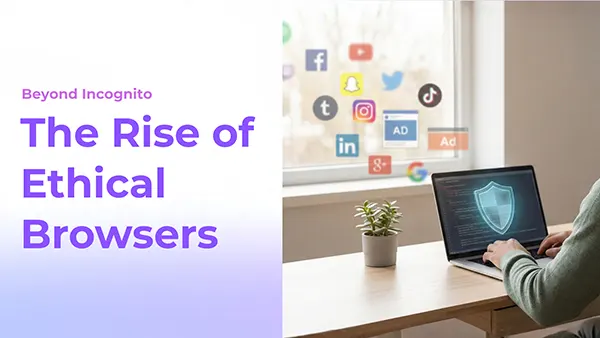
For the last decade, browser competition revolved around speed and surface-level privacy. Pages loaded faster, trackers became more visible, and “Incognito mode” gave users a sense of control. But incognito browsing doesn’t actually make the internet safer—it only hides traces after exposure has already happened.
As we move deeper into the mid-2020s, users are asking a sharper question: What browser actually protects me while I browse? Instead of providing protection after the fact, users are now seeking protection in real-time.
That question has pushed a new category into the spotlight: ethical and security-first browsers.
Algorithmic Fatigue and Doomscrolling

Most mainstream browsers are passive gateways. They don’t actively protect attention, values, or mental health. Their business incentives favor engagement—often at the cost of user well-being.
Endless feeds, sensational headlines, gambling promotions, and explicit pop-ups are not mere accidents, but rather optimized outcomes. Without guardrails, users become the last line of defense against an internet designed to overwhelm them.
This is where traditional browsers fall short. A browser can be fast and still be unsafe. A browser can be private and still expose users to harmful content.
What is an Ethical Browser?
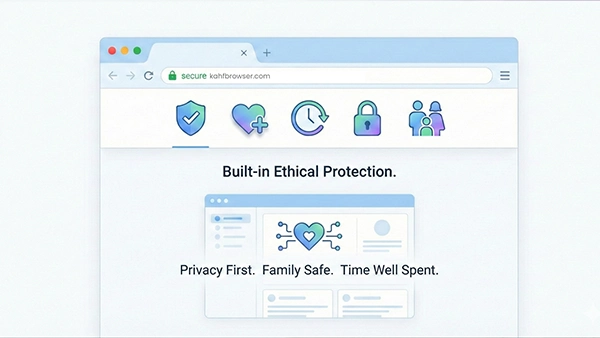
An ethical browser goes beyond simple ad-blocking. These browsers aren’t neutral; they have a distinct point of view. Whether it’s family safety, mental peace, or religious values, that code of ethics is baked right into the software.
Think about Chrome or Safari: to make them truly safe, you usually have to patch them up with ten different extensions. Ethical browsers are different. They come out of the box ready to protect you. These are one of the most secure browsers with ethical values for users built within the heart of the software.
Here is what that actually looks like in practice:
- Filtering with a Conscience: It blocks explicit junk at the DNS level so it never even touches your device.
- De-Gamification: It strips away the addictive news feeds and pop-ups designed to steal your attention.
- Real Privacy: It blocks trackers because it’s the right thing to do, not just to save data.
This is why many users now search for secure and private browsers – not in terms of raw encryption, but in terms of real-world protection.
Browsers like Kahf Browser are purpose-built with this mindset, combining privacy, content filtering, and ethical defaults into a single system rather than relying on dozens of third-party extensions.
Case Study: The “Halal” Internet Approach
One of the most interesting developments in this space is the rise of faith-aligned technology.
By default, it blocks adult content, gambling, and harmful advertising—without requiring technical expertise.
For users specifically looking for a simple way to restrict access to porn sites, this kind of built-in protection removes the need for complex router rules or third-party parental control software.
| Feature | Standard Browsers (Chrome, Safari) | Ethical Browsers (Kahf) |
| Ad Blocking | Requires Extensions | Built-in (Default) |
| Haram/Adult Content Filter | Manual Setup (DNS/SafeSearch) | Always On (Server-Side) |
| Tracker Blocking | Partial / Opt-in | Aggressive (Privacy First) |
| Gambling & Scams | Often Allowed in Ads | Automatically Blocked |
| Family Safety | Complex Parental Controls | One-Toggle Protection |
They answer a growing demand for technology that respects the user’s lifestyle rather than trying to disrupt it.
Relevant Insight: You can learn more about how specific filters work on the Kahf Halal Browsing Features page.
3 Signs You Need a Digital Detox (Or a New Browser)
How do you know if your current browsing setup is harming your digital wellbeing?
1. You Fall Down “Rabbit Holes” You open a tab to search for a recipe, and 20 minutes later you are reading about celebrity gossip or looking at “recommended” articles. This is a failure of your browser’s design.
2. You Worry When Your Kids Use Your Device If handing your phone to your child induces a panic attack about what they might accidentally click, your browser lacks essential Family Safety controls. A robust browser should act as a guardian, not a reckless accomplice.
3. You Feel “Watched” If the shoes you looked at yesterday are following you to every news site you visit today, your privacy settings are insufficient.
How to Configure a Safe Browsing Environment
If you aren’t ready to switch browsers yet, you can take steps to harden your current setup. However, the most effective ROI (Return on Investment) for your time is often switching to a purpose-built tool.
- Step 1: Aggressive Ad Blocking. Use tools that block scripts, not just visible banners.
- Step 2: DNS Filtering. Configure your router or device to use a “Family Safe” DNS which blocks known adult domains.
- Step 3: The Switch. Download a browser that does this automatically. For users prioritizing a clean, moral internet experience, Downloading Kahf offers an all-in-one solution that replaces the need for complex configurations.
The Future of Browsing is Intentional
We are moving away from “open” browsing toward “curated” browsing. Just as we choose specific diets for our physical health, we are beginning to choose specific digital tools for our mental health.
Whether it’s for religious reasons, child safety, or simple productivity, the tool you use to access the web defines your experience of the world. Don’t leave it to chance.