The increasing cases of RTX 5090 5090d bricked cases have brought serious concerns to gamers, PC builders, AI scholars, and data-science experts. The RTX 5090 and the China-only RTX 5090D have similar architectures, although a number of widespread user reports report failures as soft bricks due to driver issues, up to hard bricks due to VRM damage, VRAM overheating, and VBIOS corruption. With the extreme performance offered by the GPU market via high-power draws and heavy workloads, the nature of RTX 5090 5090d bricked has become a critical component to any person who may be using these GPUs to either play games or train machine learning and/or LLM. This manual explains the precise reason why RTX 5090 5090d bricked problems are occurring, how to troubleshoot, actual case scenarios, and viable measures to get your graphics card back online.
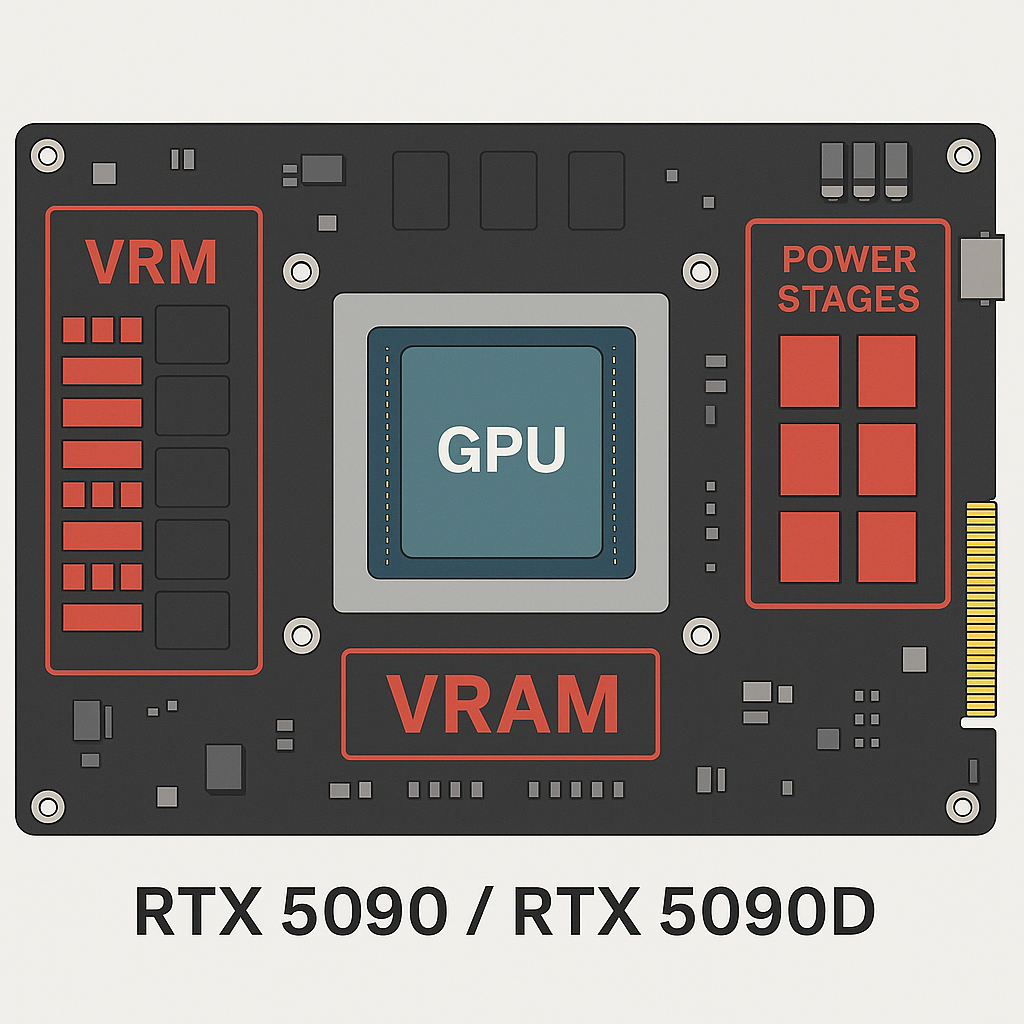
What “Bricked” Means for RTX 5090 & 5090D?
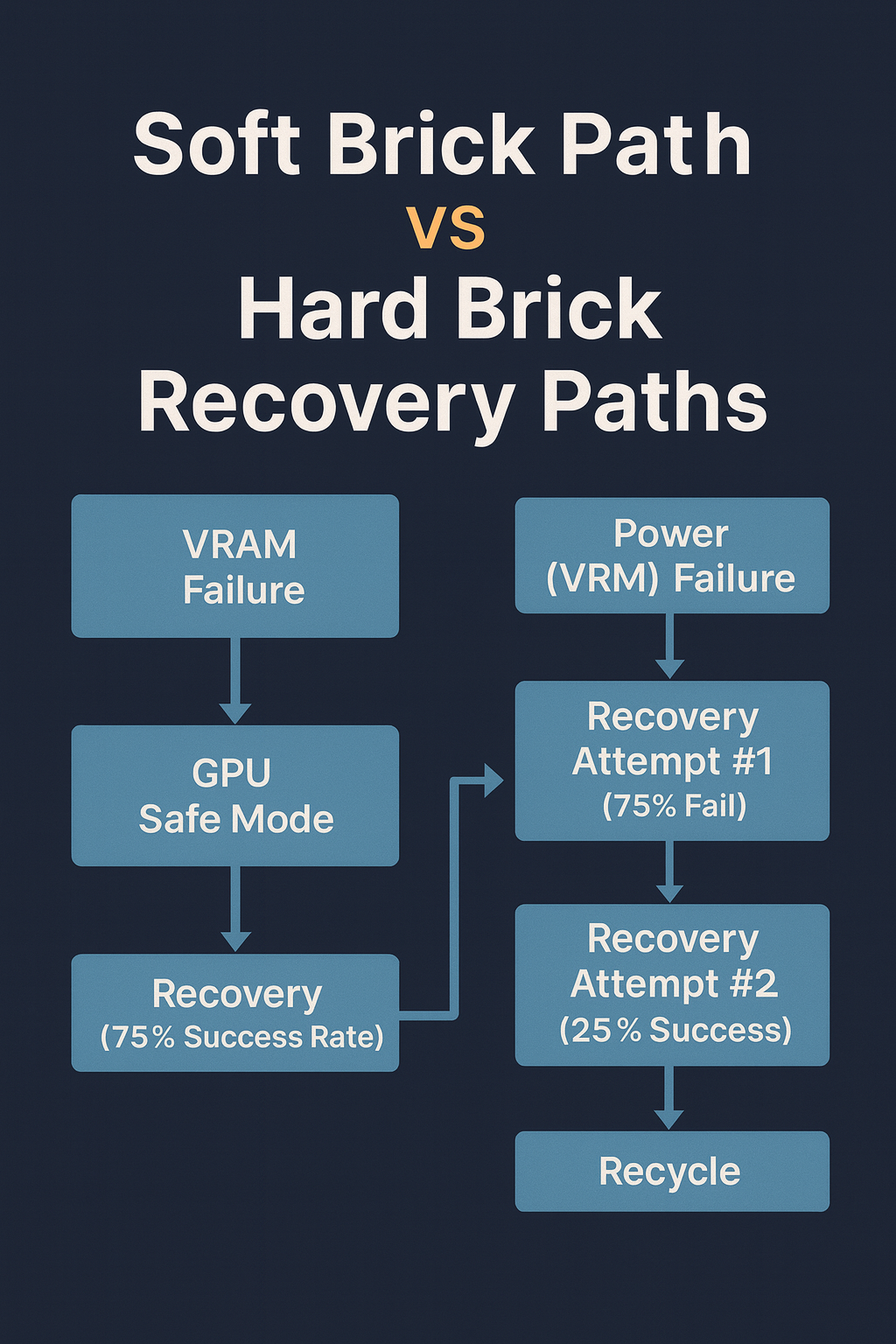
Speaking about RTX 5090 5090d bricked, it is necessary to realize the meaning of soft-brick and hard-brick. A soft-bricked GPU is normally a result of software-level problems like bad drivers, corrupted VBIOS, failed updates, unstable overclocks, or power interruptions during driver installations. These instances can be fixed usually by means of safe-mode patches, reflashing of VBIOS, or resetting drivers. Conversely, a hard-bricked GPU is a physical or electrical breakdown, like VRM burn, death of a memory controller, bad solder joints, or extreme power spike. Hard bricks cannot be repaired by an average person, and usually, they need to be repaired or replaced by professionals. A majority of RTX 5090 5090d bricking problems lie in the middle of these two categories, so correct diagnosis is paramount to prevent any more damage when fixing these problems.
RTX5090 5090D Bricked Issue Symptoms
Several typical symptoms can be used to determine RTX 5090 5090d bricked problems before a full crash of the GPU. The issues reported by users are the inability to see the GPU at all in BIOS or Device Manager, black screens during the booting process, spinning fans without display output, Windows error 43, unexpected shutdowns during gaming or AI loads, and unusually high VRAM or VRM temperatures. Certain users of the RTX 5090D also specifically state that VRAM overheats due to the lack of thermal pads. By learning these symptoms in their initial stages, you can prevent using the GPU until it is too late and you bricked the card, one of the most prominent contributors to serious RTX 5090 5090d bricked issues.
Symptom Comparison Table
| Symptom | RTX 5090 | RTX 5090D | Severity |
|---|---|---|---|
| Not detected in BIOS | ✔ | ✔ | High |
| Sudden shutdown under load | ✔ | ✔ | Medium |
| VRAM overheating | ❌ | ✔ | Critical |
| Error Code 43 | ✔ | ✔ | Medium |
| Fan spin but no display | ✔ | ✔ | High |
| Driver crash loop | ✔ | ✔ | Medium |
What Causes RTX 5090 5090D Bricked Issues?
It is important to understand the underlying factors that lead to rtx 5090 5090d bricked problems to be able to troubleshoot. The majority of incidents can be classified in one of the following categories:
Malfunctioning or broken NVIDIA Drivers
Many users noted that the first 2025 NVIDIA drivers released were unstable, which directly caused RTX 5090 and 5090d bricking problems. Those issues are caused by the disputes in the course of DLSS operations, ray-tracing pipes, and CUDA workloads. Installing or updating drivers can cause the GPU to crash, get stuck in safe mode, or go into a full brick. This kind of soft brick may be reversed by DDU cleanup, driver rollback, or safe-mode reinstall.
VRAM & VRM Overheating
One of the most frequent reasons for RTX 5090 5090d bricked is caused by overheating of the memory modules or voltage regulation parts. According to the thermal pad gaps, poor contact pressure, and VRM overheating being likely to cause permanent damage, the RTX 5090D, designed on a slightly different PCB, has more reports of overheating. Constantly high temperatures over 100 °C may impact memory ICs, resulting in the display malfunction or the death of the GPU. This damage can be accelerated through AI workloads like the training of tensors.
PCIe Gen 5 Power Spikes
The two GPUs are both capable of short bursts of power that occasionally surpass the ability of the PSU. These spikes, particularly when using LLM fine-tuning or real-time ray tracing, have been linked to bricking RTX 5090 5090d with transient voltage spikes. The risk is exacerbated by cheap or old PSUs that are not properly suppressed with transients.
VBIOS Corruption
Crippled firmware is also another typical cause of RTX 5090 5090d bricked problems. The interruptions during VBIOS update procedures, third-party compatibility mods, or flashing with the overclock tools can render the GPU unusable. Although it can be repaired using blind-flash or NVFlash, serious cases of corruption need repair by experts.
CUDA-Intensive Workloads that cause Failure
According to data scientists, RTX 5090 5090d has a higher rate of being bricked during training of an LLM or a heavy CUDA simulation. These loads put tensor cores and VRAM to the utmost. They can be used together with early driver bugs to create memory leakages that can raise die temperature to a potentially dangerous level, causing shutdowns or even irreversible PCB damage.
Physical/ Manufacturing Defects
There are uncommon RTX 5090 5090d bricked problems that are caused by defective components in the form of VRM coils, memory controllers, or power traces. They normally appear at the beginning of the life cycle of the GPU, and they are frequently covered by RMA.
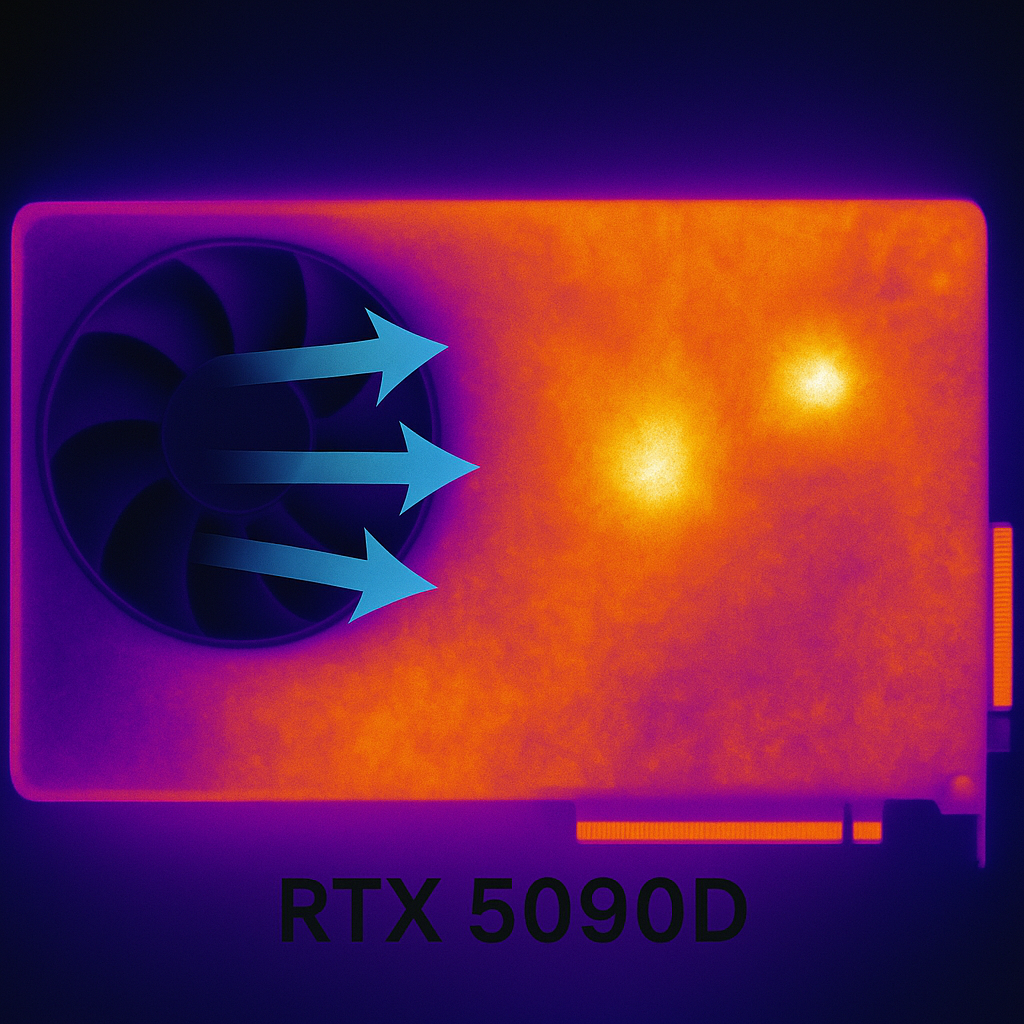
Routing to Diagnose RTX 5090 5090D Bricked Issues
The diagnosis of RTZ 5090 5090d bricked Issues is a step-by-step process. The first thing to check is whether in BIOS or in Device Manager, it is possible to see the GPU. Otherwise, check PCIe seating, attempt switching PCIe slots, and compose networks of the PSU. Next, reset the safe-mode drivers with DDU. When that does not work, check temperatures using logs, VRM failures, and a second PSU. Trying VBIOS restore, in case the GPU partially works. Do not repeatedly restart the power of the GPU when you think that there are short circuits – it only exacerbates the problem of rtx 5090 5090d being bricked in the long run.
Fixes & Recovery of RTX 5090 5090D Bricked Issues
These are the best solutions for RTX 5090 5090d bricked Issues, separated into soft-brick and hard-brick cases.
Soft Brick Fixes
These are the solutions applicable to the majority of reversible RTX 5090 5090d bricked:
DDU Clean Driver Reinstall
Safe mode Boot into safe mode, uninstall drivers completely (using Display Driver Uninstaller), and then install a stable version of the driver.
Safe-Mode Driver Rollback
Back up to the original functional driver to revert the corruption problems.
VBIOS Reflash with NVFlash
In case the graphics card is partially identified, reload the stock VBIOS in the TechPowerUp database.
How to fix Bad Overclock Profiles.
Delete MSI Afterburner or other OC tool settings that can have been configured for unstable graphics voltage/frequency curves.
Link Speed Reset (Auto/Gen 4) PCIe.
Momboard assistance that has problems with Gen 5 lane instability.
Hard Brick Fixes
There are more advanced techniques needed to resolve hard-brick RTX 5090 5090d bricked issues:
Blind-Flash VBIOS
Applied in cases of no display output, but where there is still even initialisation of power stages by the GPU.
Thermal Pad Replacement
The problems of 5090D VRAM can be resolved by the application of high-quality pads.
Under-Volting for Stability
Lessens heat load and removes repeat post-recovery failures.
Multimeter PCB Testing
Serving to conduct VRM tests or burned parts.
Professional Repair or RMA
Home repair is not advisable in case of burn marks, blown VRMs, and cracks in solder joints.
Also Read: What is qizdouyriz03?
Prevention Guide of RTX 5090 5090D Bricked Issues
To avoid the problem of RTX 5090 5090d bricked, it is necessary to know how to work with workloads and thermals at the GPU. Players must not turn to early drivers, turn off experimental overclocks, and keep aggressive fan curves. Users of data science should not use unstable CUDA packages, should use a smaller batch size, and should monitor the thermals of VRAM. A PSU that is of high transient load tolerance is used to reduce the failures that occur when the AI is training heavily. The possibility of RTX 5090 5090d bricking recurring is significantly reduced by regular cleaning, good airflow, and undervolting.
Recommended GPU Settings Table
| Use Case | Fan Curve | Voltage | Power Target |
|---|---|---|---|
| Gaming | Aggressive | Stock | 100% |
| AI Training | Max | -50mV | 90% |
| Rendering | Balanced | -30mV | 100% |
Impact of Bricked GPUs on AI & Data Science
Users who are running large language models, diffusion models, and simulations that are being run on the device have reported many instances of RTX 5090 5090d bricked Issues. These loads are more damaging to memory controllers than games, leading to high temperatures in a short amount of time. Incompatible CUDA installation and memory overflow bugs have the potential to cause damage which is irreparable damage to the device. The possibility of losing a lot of data, workflow disruption, broken models, among other things, when a GPU bricks during AI training illustrates the necessity of monitoring and preventive actions.
Also Read: Tinyurl.com/lkmschromebookcheck
When to Request an NVIDIA RMA
In case your problem with rtx 5090 5090d bricked Issues has physical damage in it, burns or dead VRMs, or even noticeable cracks on the components, then RMA is necessary at once. NVIDIA normally will not deny the claims unless there are any indicators of physical alteration done by users. Bricking under software or driver conditions can still be an RMA, provided that there is no external damage to the GPU.
Conclusion
The increase in RTX 5090 5090d bricked issues is indicative of the fact that taking next-gen GPUs to their limits in terms of performance presents new risks. These factors may result in temporary failures or permanent damage to the GPUs, depending on the cause of the situation, such as overheating, unreliable drivers, or unstable power. After the suggested diagnostics, implementation of the appropriate corrections, shunning dangerous loads, and keeping the thermals in the right condition can give the possibility of encountering the problem of RTX 5090 5090d bricked issues a significant advantage. In case of extreme malfunctions that entail physical damage, RMA is the most secure and reliable. When properly managed and monitored, users can avoid most cases of RTX 5090 5090d bricked issues and ensure that their GPUs will continue to run for many years.
FAQs — RTX 5090 5090D Bricked Issues
1. Why are rtx 5090 5090d bricked issues happening so often?
Because of extreme thermals, early driver instability, VRM stress, and AI workloads pushing GPUs harder than before.
2. Is the RTX 5090D more prone to rtx 5090 5090D bricked issues?
Yes — VRAM thermal issues are more common in the 5090D variant.
3. Can a bricked GPU be recovered at home?
Soft bricks often, yes; hard bricks usually no.
4. Do power spikes really cause RTX 5090 5090d bricked issues?
Yes, especially with unstable PSUs.
5. Can undervolting prevent RTX 5090 5090d bricked issues?
Undervolting helps reduce thermals significantly.